What Is Meta Muse?
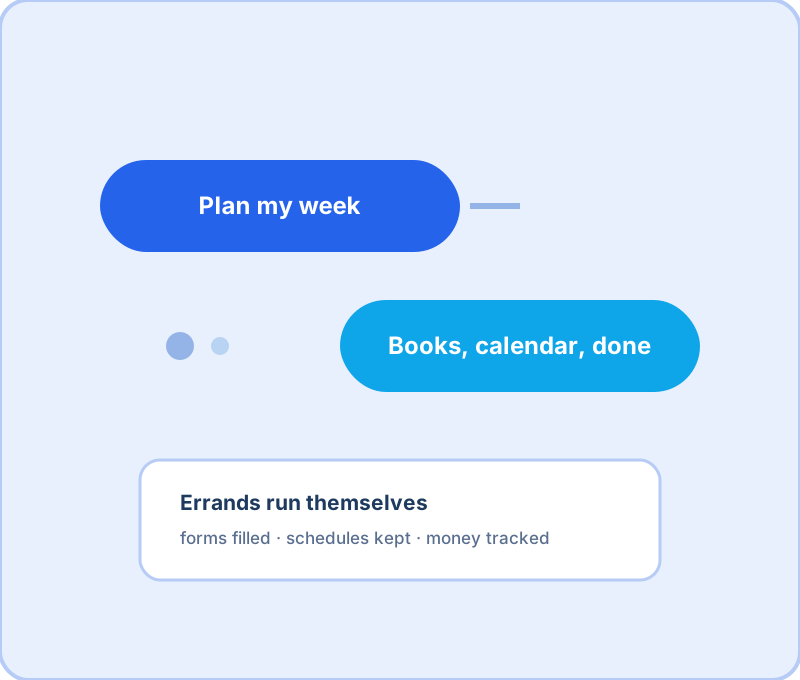
Muse is Meta's personal AI agent, launched September 8, 2026 on iOS, Android and muse.ai. Meta's own framing: you share a goal, Muse builds a plan, coordinates your time and resources, then advances the work on its own — including opening a browser, filling out forms, and negotiating on your behalf.
An agent, not a chatbot
The defining difference is action. A chatbot returns text; Muse connects to six categories of your digital life — email, calendar, payments, health, shopping and smart home — and executes across them with minimal supervision. Ask it to find a weekend slot everyone can make, book it, and add travel time; the point is that it happens, not that it gets explained.
| Meta AI (chatbot) | Muse (agent) |
|---|---|
| Answers questions and chats | Runs multi-step errands to completion |
| Knows the web | Knows your inbox, calendar and budgets |
| Free, casual use | Free tier, plus paid headroom for heavy use |
| Stands alone | Works across apps, forms and services |
The launch, briefly
Muse hit number one on the US App Store within days and passed 2.5 million US downloads by September 23, per Sensor Tower. Meta shipped fast afterwards: a Mac client on September 17 and small-business integrations on September 29 — a cadence that treats the launch as an opening move. Our download guide covers getting it set up, and the tips page collects the settings worth changing first.
Where it runs
iPhone and Android apps, the muse.ai site, a Mac client, and WhatsApp — all counted against one weekly allowance, so you can start a task on your phone and check it from a laptop. One requirement surprises new users: Meta requires a payment card on file even for the free tier, alongside the 18+ US-only gate at launch. It doubles as an anti-abuse check — the signup walkthrough explains what to expect.
How Muse makes money (and why the free tier is real)
Meta priced Muse the way it subsidized Llama and Meta AI: adoption first. The free tier's 100-million-token weekly allowance is generous by consumer standards, and the paid tiers sell headroom rather than unlock features — a structure closer to a utility bill than a feature paywall. Details and a decision table are on the pricing page.
What Muse is not (yet)
Honesty requires the flip side of the launch glow. Muse's ecosystem is months old: third-party integrations are thin compared with mature assistants, availability outside the US has been rolling out gradually since the launch gate, and "negotiates on your behalf" is a promise that varies in practice by the company on the other end of the form. None of these are disqualifying — they are the normal texture of a month-two product. The guide's bias is to tell you which parts feel finished (scheduling, research, inbox triage) and which deserve patience.
For the builders: a sibling named Muse Spark
Days before launch, Meta announced Muse Spark 1.3, an agentic coding model for developers — the consumer Muse runs on the same model family. If your interest is code rather than errands, that distinction matters; we untangle the naming on the Muse Spark page.
Frequently asked questions
Is Muse free?
Yes — Meta positioned the free tier as enough for most everyday use, with a reported weekly allowance of 100 million tokens. Two paid tiers (Power at $20 and Maximum at $100 a month) buy larger weekly allowances, not extra features.
Is Muse the same as Meta AI?
No. Muse is a separate task-executing agent: it connects to your email, calendar, payments and more, then carries out multi-step goals on your behalf — not just answer questions.
Which devices does Muse run on?
iPhone and Android apps, the muse.ai website, the Mac client (since September 17, 2026), and WhatsApp as a chat entry point. All surfaces count against the same weekly allowance.